Brown patches, sun spots and uneven skin tone are some of the most common concerns we see at Alchemy Clinic. However, one of the biggest misconceptions about pigmentation is that it's all treated in the same way.
In reality, there are several different types of pigmentation, and understanding which type you have is one of the most important steps in choosing the right treatment.
At Alchemy Clinic, every pigmentation journey begins with a consultation. Before recommending any treatment, we'll assess your skin, identify the type of pigmentation you're dealing with and create a personalised treatment plan based on your skin, your goals and the most appropriate treatment options.
Every person's skin is different, and so is every pigmentation concern.
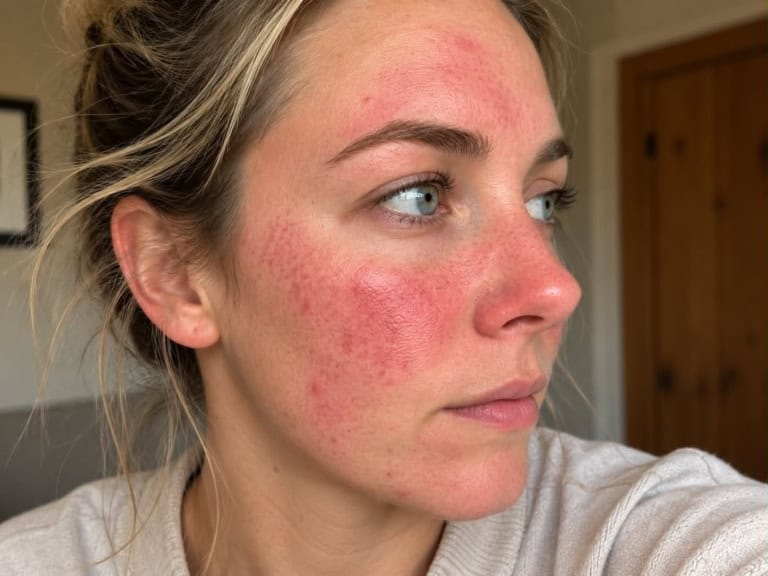
Some clients are bothered by age spots that have appeared over time, while others develop larger patches of pigmentation following hormonal changes, pregnancy or inflammation. Although these concerns may look similar, they often require very different treatment approaches.
Rather than recommending the same treatment for everyone, we take the time to understand your skin before deciding which treatments are most appropriate.
Depending on your skin and your goals, you can choose from three consultation options.
Perfect if you're looking for expert skincare advice but aren't ready for in-clinic treatments or you simply can't get to the clinic.
Together we'll assess your skin, current routine, lifestyle and concerns before creating a personalised homecare plan.
£50 redeemable against the purchase of two or more products within four weeks.
Request an Online Homecare Consultation
Ideal if you're looking for professional skincare advice and a personalised treatment plan for pigmentation.
Request an In-Clinic Skin Consultation
Our most popular consultation for clients with persistent, complex or long-standing skin concerns.
Together we'll assess your skin, discuss your medical history, previous treatments, lifestyle and skin goals before creating a personalised treatment plan.
Included:
Comprehensive skin consultation
Personalised treatment plan
Omega-3 Balance Test
Follow-up review
Request a Deep Dive Consultation
Pigmentation occurs when the skin produces excess melanin - the natural pigment responsible for the colour of our skin, hair and eyes.
This can happen for many different reasons, including years of sun exposure, hormonal changes, inflammation following acne or injury, genetics and the natural ageing process.
Although pigmentation often appears similar, the underlying cause can vary considerably, which is why an accurate diagnosis is so important.
| Type | What it often looks like | Common influences | Typical treatment approach |
|---|---|---|---|
| Sun Damage (Solar Lentigines) | Individual, well-defined brown spots | Years of UV exposure | Often responds very well to IPL, CryoPen, chemical peels or other targeted treatments. |
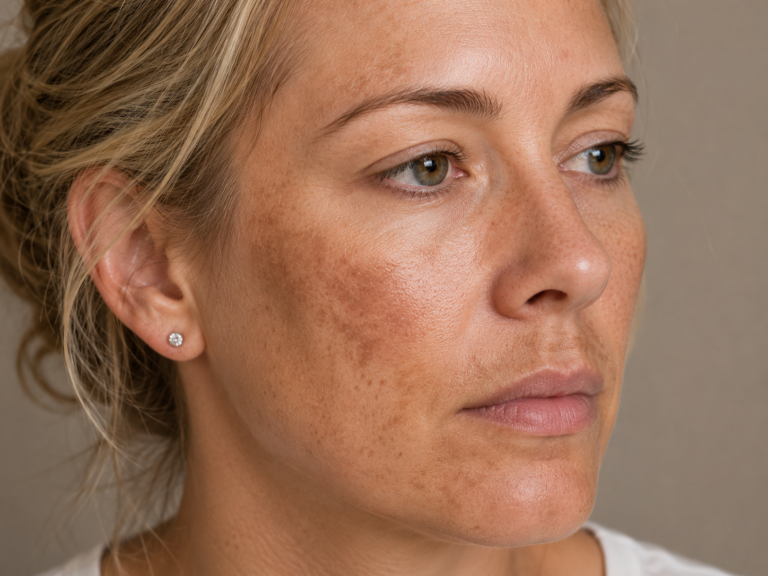
| Melasma | Symmetrical patches, often across the cheeks, forehead or upper lip | Hormones, UV exposure, heat and genetics | Usually requires careful long-term management using carefully selected treatments and ongoing protection. |
| Post-Inflammatory Hyperpigmentation (PIH) | Marks left behind after acne, eczema or skin injury | Inflammation | Treatment focuses on gradually fading pigmentation while supporting healthy skin renewal. |
| Freckles | Small scattered brown spots that darken during summer | Genetics and UV exposure | Usually harmless. Treatment is optional and recurrence is common without sun protection. |
Pigmentation can be surprisingly difficult to identify accurately.
Two people may both have brown patches on their cheeks, yet one may have melasma while the other has sun damage. Although they can look very similar, the treatments can be completely different.
To make things even more complex, many people don't have just one type of pigmentation - they have a combination. For example, it's common to see melasma alongside sun damage, or post-inflammatory pigmentation alongside freckles. Each type behaves differently and responds differently to treatment, which is why an accurate diagnosis is so important.
For example, IPL can produce excellent results for many forms of sun damage. However, the same treatment may not be suitable for melasma and, in some people, could even make it worse.
Not every brown mark is simply pigmentation either. During your consultation, we'll carefully assess your skin to determine exactly what you're treating before recommending the most appropriate treatment plan.
Pigmentation isn't always simply the result of spending too much time in the sun.
For some people, hormones, genetics, inflammation, UV exposure and even heat may all play a role in how pigmentation develops or behaves.
During your consultation, we'll discuss your skin history, previous treatments, hormonal changes where relevant and other factors that may help us build a more complete understanding of your skin before recommending treatment.
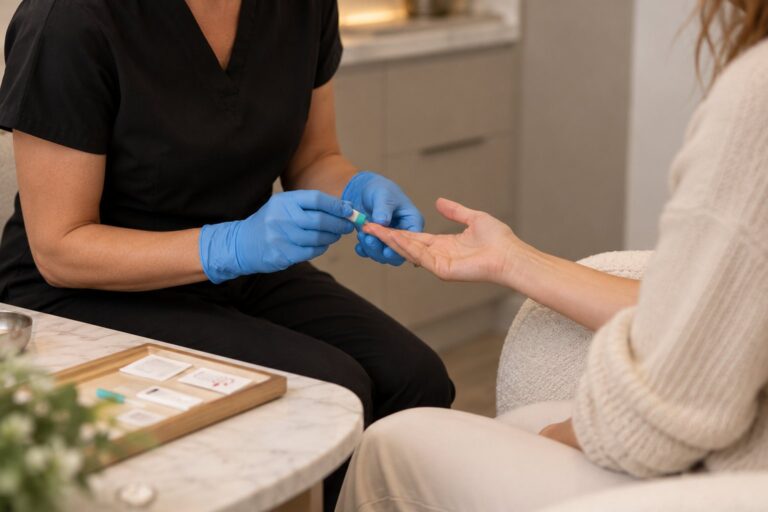
Testing isn't appropriate for everyone, but where relevant it can help us better understand your overall health alongside your skin.
Depending on your consultation, we may recommend:
Omega-3 Balance Test (included with the Deep Dive Consultation)
Vitamin D Test
HbA1c Test (where clinically appropriate)
Gut Health Test
These tests are considered alongside your consultation and clinical assessment to help guide more personalised recommendations where appropriate.
Not every treatment is suitable for every type of pigmentation.
Once we've identified the type of pigmentation you're treating, we'll recommend the most appropriate treatment plan based on your skin, your goals and the type of pigmentation we're treating.
IPL is one of the most effective treatments for many forms of sun damage and age spots. It targets excess pigment within the skin, helping darker patches gradually break down and fade while improving overall skin clarity.
Microneedling stimulates the skin's natural repair processes while delivering brightening growth factors into the skin. It can help improve overall skin tone, support healthy skin renewal and improve the appearance of certain types of pigmentation.
Learn more about Microneedling
Carefully selected chemical peels encourage healthy skin renewal and can improve the appearance of uneven pigmentation while leaving the complexion looking brighter and more even.
The type of peel recommended will always depend on your skin and the type of pigmentation being treated.
Learn more about Chemical Peels
CryoPen uses controlled cryotherapy to remove selected superficial pigmented lesions, including certain sun spots and age spots.
It isn't suitable for every type of pigmentation, which is why an accurate diagnosis is essential before treatment.
Whether you've been living with pigmentation for years or you've only recently noticed changes in your skin, successful treatment starts with understanding exactly what you're treating.
At Alchemy Clinic, we believe an accurate diagnosis is the foundation of great results. By identifying the type of pigmentation you have and tailoring your treatment plan accordingly, we can recommend the safest and most effective approach for your skin.
Request your consultation today and let's create a personalised plan for clearer, more even-looking skin.
This depends on the type of pigmentation you're treating.
Some forms of pigmentation, such as many sun spots, can often be treated very successfully. Others, such as melasma, are considered long-term conditions that can be managed but may return over time.
We'll always discuss what is realistically achievable during your consultation.
No.
Although they can appear similar, melasma and sun damage are different conditions and often require different treatment approaches. This is one of the reasons why an accurate diagnosis is so important.
Yes. In fact, it's very common.
Many people have a combination of pigmentation concerns, such as sun damage alongside melasma or post-inflammatory pigmentation following acne. Because each type responds differently to treatment, accurately identifying what you're treating is one of the most important parts of creating an effective treatment plan.
Some forms of pigmentation, particularly melasma, can recur following sun exposure, heat, hormonal changes or other triggers.
We'll discuss ways to help reduce the risk of recurrence as part of your personalised treatment plan.
The answer depends on the type of pigmentation you're treating, how long it's been present and the treatment recommended.
Some pigmentation concerns respond quickly, while others require a series of treatments over several months.
During your consultation, we'll explain what you can realistically expect and create a treatment plan tailored to your skin.
Online Homecare Consultation
£50
In-Clinic Skin Consultation
£75
Deep Dive Consultation
£165